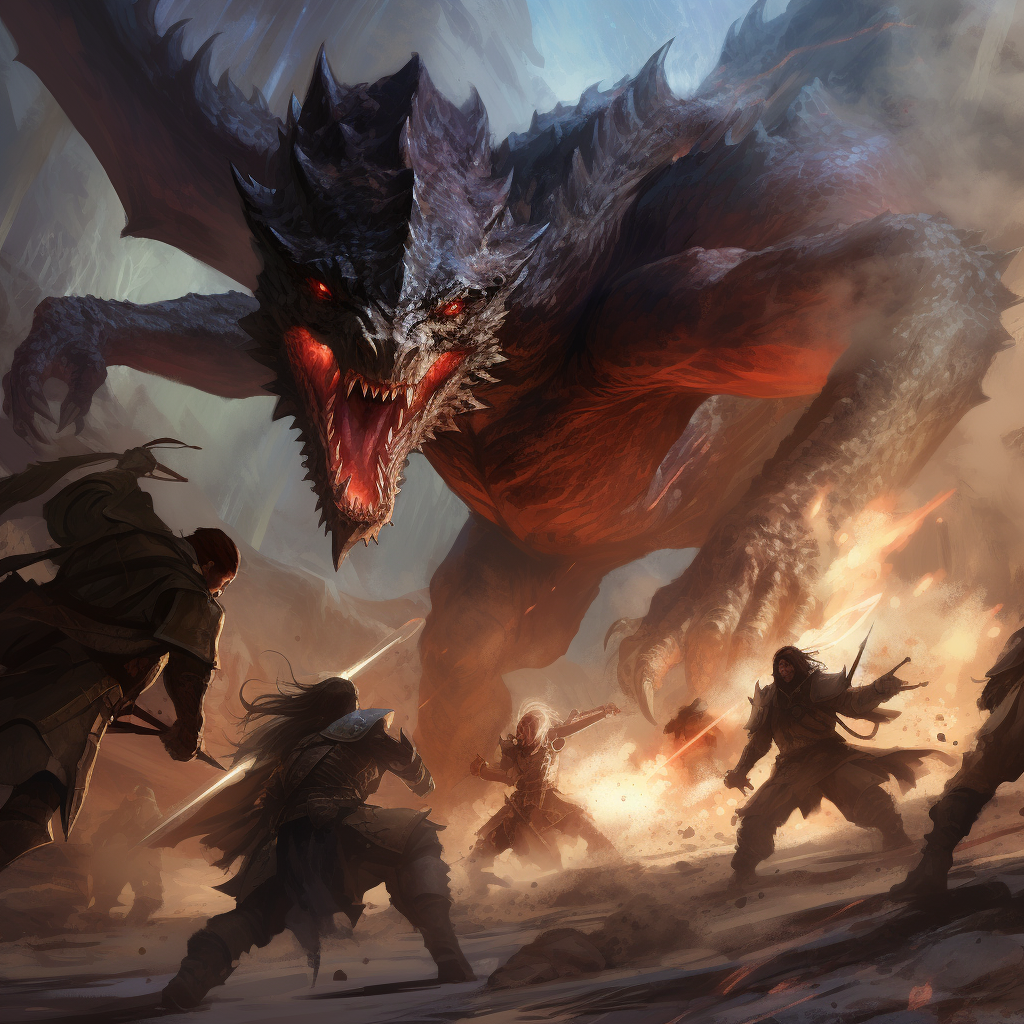
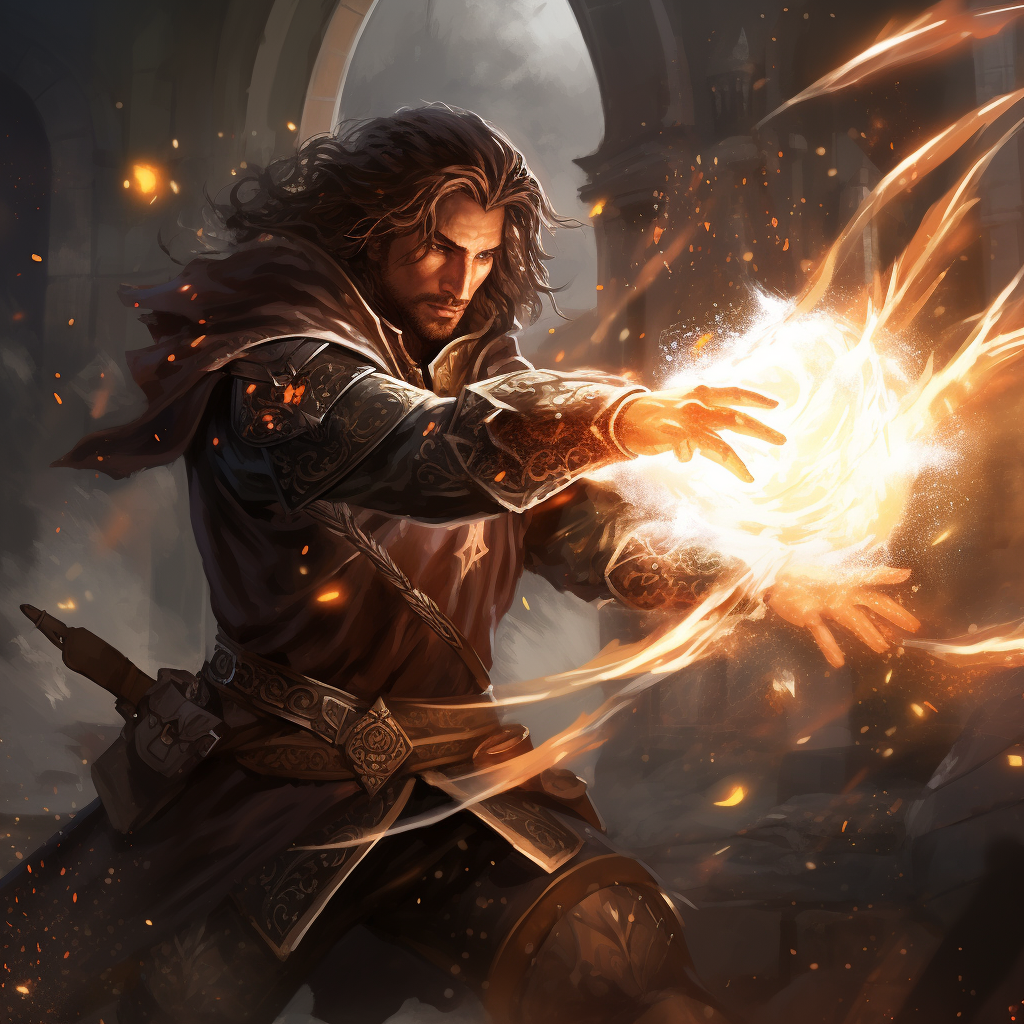
Welcome to the Ethorian homebrew system! This section contains all the custom rules, items, feats, spells, and modifications used in our campaign. Our homebrew content has been developed over multiple campaigns and carefully balanced for engaging gameplay while maintaining the spirit of D&D 5e.
Flexible Spellcasting: Open spell lists, mental/martial mage options, and spell point variants
Character Customization: Unique feats, improved class features, and weapon specializations
Quality of Life: Streamlined resting, improved hit point progression, and flexible attunement
World Integration: Custom calendar system, achievement tracking, and experience point buy options
Important: All homebrew content requires DM approval before use in the campaign. When in doubt, discuss your character concepts and mechanical choices with the DM to ensure they fit the campaign's balance and narrative.
Campaign-Specific Rules
These homebrew rules modify standard D&D 5e mechanics to better suit our campaign style and player preferences.
Whenever a player hits with a critical strike against an opponent, the amount of damage that would initially be rolled is now instead maxed out. The additional dice that would be rolled is still rolled and added to the maxed damage.
Example: A critical hit with a longsword (1d8) deals 8 + 1d8 damage, plus ability modifiers.
Improved Armor Class
"Glancing Blow" - Whenever an attack hits your AC exactly, the damage is halved. This stacks on top of resistances and saving throws.
Potions & Potion Actions
The required time to pull and quaff a potion changes from one action to one bonus action. This enables many classes, especially more melee/combat focused classes, the ability to down a healing potion or enhancing liquid without sacrificing their entire round of attacks.
Administering a potion to an unconscious character still requires an action
Handing off a potion to another individual already in hand only uses your movement and a free action (within 5 ft)
Taking an action to drink a potion results in maximum healing
Healing Temp Buff
Whenever you heal via potion or spell you gain temporary hit points equal to your proficiency bonus. You gain this temporary hit point buff only once from each source of healing.
Note: With this ruling, all temporary hit points now stack.
Mental Mages
When creating a mage that uses a spellcasting ability, you can choose any mental ability stat (Intelligence, Wisdom, Charisma) for its spellcasting ability.
This rule removes the Constitution Sorcerer option.
Martial Mages
When creating a martial character whose magics require you to use a mental ability such as the Eldritch Knight or Arcane Trickster, you can also choose to use your Constitution ability for your magics instead.
Improved Constitution
While leveling the character you may choose to take the average of the Hit Dice or roll for adding Hit Points. If you choose to roll for Hit Points and obtain a dice roll lower than the average of the hit dice, you would then take the average instead.
This roll must be observed by another player or the Dungeon Master.
Over-Exert Charged Abilities
Whenever you want to use an ability that has no charges (Charges, Points, Dice, Rage, etc.) you can expend another use of that ability by taking exhaustion levels per charge/resource used for the ability.
Throwing Accuracy
A weapon with the Throwing/Pulling property uses 'Dexterity or Strength'. A weapon that uses the loading property, such as a crossbow, only uses 'Dexterity'.
Quick Surveillance
Taking a view of your surroundings is a quick visual of the current state of the battlefield or encounter. During initiative, a character may make one Wisdom [Perception] check during their turn using a free action to do so. If a character uses a free action to do so, they cannot relay the information from the perception check on that turn as another free action unless it can be relayed in one or two words.
Warrior's Endurance
A long rest is never mandatory, but going without sleep does have its consequences.
Whenever you end a 24-hour period without finishing a long rest, you must succeed on a DC 10 Constitution saving throw or suffer one level of exhaustion
After the first 24 hours, the DC increases by 5 for each consecutive 24-hour period without a long rest
The DC resets to 10 when you finish a long rest
Super Attunement
Magic Item attunement is no longer limited to only 3 attuned items. Item attunement is unlimited but once a creature not built to handle multiple attunements beyond 3 might start seeing magical side effects of being over attuned.
A variation of this spell is to limit attunement slots up to your proficiency bonus.
Multi-vantages
When gaining multiple advantages and disadvantages you start gaining a +1 to the dice roll for every advantage beyond the first source and the adverse for disadvantage. If there are multiple sources giving both Advantage and Disadvantage they continue to negate each other until the sources give a positive or negative effect to the roll.
Holding Turns
Instead of by the book only being allowed to hold an action during combat you can elect to hold your turn but can only be triggered by using your reaction to later trigger your held turn. When a player elects to hold their turn they must give a DM trigger to allow their turn to be triggered later on.
Magic Items & Equipment
These are custom magic items that have been created specifically for this campaign. Each has been balanced and approved for use.
Rope of Mending
Rarity: Common
Type: Wondrous Item
Properties: This magical rope can be commanded to mend itself when damaged or cut. As an action, you can speak the command word to cause the rope to repair any breaks or frays, restoring it to its original condition.
Description: A sturdy hemp rope with faint arcane runes woven throughout its length.
Bag of Colding
Rarity: Uncommon
Type: Wondrous Item
Properties: This bag maintains a cold temperature inside, similar to a modern refrigerator. Items placed inside remain fresh and preserved. The bag can hold up to 500 pounds of material.
Description: A leather satchel with a frosty exterior and cooling enchantments that preserve perishable goods indefinitely.
Deck of Minor Things
Rarity: Rare
Type: Wondrous Item
Properties: A less dangerous version of the Deck of Many Things. Drawing cards produces minor magical effects, boons, or small challenges rather than world-altering consequences.
Description: A deck of ornately illustrated cards with minor enchantments, perfect for those seeking adventure without catastrophic risk.
Displacer Cloak
Rarity: Very Rare
Type: Wondrous Item (Attunement)
Properties: While wearing this cloak, your image appears to shift and blur. Attack rolls against you have disadvantage. If you take damage, this property ceases to function until the start of your next turn.
Description: A dark cloak woven from the hide of a displacer beast, granting its wearer the creature's signature displacement ability.
Charged Ring of Invisibility
Rarity: Legendary
Type: Ring (Attunement)
Properties: This ring has 3 charges. While wearing it, you can use an action to expend 1 charge to cast the Invisibility spell on yourself. The ring regains 1d3 expended charges daily at dawn.
Description: An elegant silver ring with a clear gemstone that seems to fade in and out of view.
Additional custom items are available in individual item detail pages.
Homebrew Spells
Our campaign uses several custom spells and spell-related systems. Below are some key modifications to the spellcasting system.
Open Spell Lists
There are no longer spell class restrictions on spells - any character can take any spell. All spells are available to all spell casters.
Important: When creating a character or taking new spells it is highly recommended to discuss these choices with the other party members so there isn't too much spell overlap causing a loss in character identities.
Spell Preparations
If you are a prepared caster and don't plan on changing any spells after a long rest, the spell list that was already prepared previously is already available to the character. Otherwise any spell change will require a character to perform the preparation requirements.
Additionally, if a prepared caster does not wish to prepare all of their spells they can leave any number of prepared slots open to be prepared at a later time.
Ranger & Paladin Enhancements
Rangers are now prepared spell casters (instead of known spells)
Rangers and Paladins can now select two cantrips when taking the first level in either class
Spell Points System (Optional)
Using a variant System to cast spells from a pool of points gained after a long rest. This is a variant option in the 5e DMG.
Homebrew Modification - Casting Multiple 6th Level or Higher Spells: By the DMG you can only cast a 6th level or higher spell once per day using this spell casting method. The rule instead is you may cast any spell of 6th level or higher multiple times. Each time you cast the spell the amount of time greater than the normal amount of slots you would normally allow for, you double the total amount of spell points it would cost you. This cost increases exponentially for all spells cast beyond their normal spell slot limitations.
For a complete list of homebrew spells, see the dedicated spells section or download the complete homebrew PDF.
Through your vast experience and keen understanding, you have mastered the art of teaching and learning, becoming a guiding mentor to others and a diligent student yourself.
Ability Score Improvement: When you choose this feat, increase one ability score of your choice by 1, up to a maximum of 20.
Skill Proficiency: You gain proficiency in one skill of your choice in which you are not already proficient.
Teaching Mastery: You can use your action to teach a skill, ability, or spell you are proficient in to a creature you can communicate with. For the next hour, whenever the creature attempts a check related to the taught skill, ability, or spell, they can roll with advantage. This benefit can be used once, and then it cannot be used again until you finish a long rest.
Learning Affinity: When you are being taught a skill, ability, or spell, and you spend at least 1 hour practicing under guidance, you gain advantage on any ability checks related to learning this new skill, ability, or spell for the next 24 hours.
Swift Ritualist
Type: Feat
Prerequisites: 6th level Wizard
Benefit: Your advanced understanding of arcane rituals and efficient spellcasting techniques has significantly reduced the time required for you to perform ritual spells.
Accelerated Rituals: When you cast a spell as a ritual, the additional time required to perform the ritual is reduced from 10 minutes to just 1 minute. This represents your ability to quickly and efficiently set up and execute the necessary ritual components.
Arcane Devotion
Type: Feat
Prerequisites: 8th level Wizard
Benefit: You have developed a profound connection with a specific spell, allowing you to integrate it deeply into your magical repertoire through dedicated ritual practice.
Favored Spell Selection: Choose one spell from the Wizard spell list that is already prepared - this is now your Favored Spell. This spell must be of a level for which you have spell slots.
Ritual of Devotion: You can perform a special ritual to cast your Favored Spell without expending a spell slot. This ritual takes a number of hours equal to the spell's level to complete. During this time, you must be focused on the ritual without interruption. This ritual must be performed a number of times equal to the spell's level before Spell Integration can occur. If the ritual has not been performed in the last 1 year you must start this process over from the beginning.
Spell Integration: After performing the Ritual of Devotion the required amount of times for Spell Integration, the Favored Spell becomes a permanent part of your known spells. You no longer need to prepare this spell, and it does not count against the number of spells you can prepare each day.
Renewed Devotion: Once you have integrated a Favored Spell into your known spells, you can select a new spell from the Wizard spell list to become your next Favored Spell during a long rest. This process can be repeated, allowing you to gradually expand your repertoire of deeply understood spells.
Spelldriver
Type: Feat
Prerequisites: Spellcasting ability
Through intense focus, training, and dedication, you've harnessed the techniques of rapid spellcasting. You are no longer limited to only one non-cantrip spell per turn. However, should you cast two or more spells in a single turn, only one of them can be of 3rd level or higher.
The normal ruling for spell casting is to only cast one spell as an action without being able to cast another as a bonus action unless the spell cast as an 'Action' is a cantrip.
Better Arcane Archer
Type: Class Feature Modification
Class: Fighter (Arcane Archer)
The Fighter Arcane Archer's arcane shots are now equal to the character's proficiency bonus. Using a bonus action once per round, if you do not use an arcane shot, you may imbue your ammunition to gain a +1 to the attack and the ammunition is considered magical. This can only be added to non-magical ammunition.
Additional Game Systems
Flanking Rules
Status:In Use
When a creature and at least one of its allies are adjacent to an enemy and on opposite sides of the enemy's space, they flank that enemy, and each of them has advantage on melee attack rolls against that enemy.
Spell Point System
Status:Optional for Spellcasters
Players may choose to use spell points instead of spell slots for more flexibility in spellcasting. See DMG p. 288-289 for base rules. Our campaign includes additional homebrew modifications for 6th level and higher spells (see Custom Spells section).
Experience Point Buy System
Status:Available
A homebrew system that allows players to spend experience points to gain additional abilities, features, or customization options beyond standard leveling. Details available in the full homebrew document.
Weapon Specialization & Signature Spells
Status:Available
An optional progression system that allows martial characters to specialize in specific weapons and spellcasters to develop signature spells with enhanced effects.
Achievement System
Status:Active
Players can earn achievements for completing specific tasks, reaching milestones, or performing exceptional feats. These achievements may grant mechanical benefits or special recognition within the campaign world.
Building Your Character
Ability Scores
Method: Point Buy (27 points) or Standard Array
Racial Bonuses: Use Tasha's rules for flexible racial ability score increases
Mental/Physical Flexibility: See our Mental Mages and Martial Mages homebrew rules for spellcasting ability options
Starting Equipment
Method: Choose class equipment or roll for starting gold
Additional: Starting equipment varies by campaign start - consult with DM
Backstory Requirements
Provide at least one meaningful connection to another party member (if applicable)
Include a personal goal or motivation
Describe your character's relationship to their family/homeland
Explain why your character became an adventurer
Consider how your character fits into the Ethoria campaign setting
Allowed Content
Core Books: Player's Handbook, Xanathar's Guide, Tasha's Cauldron of Everything
Additional Sources: DM approval required for other official content
Homebrew: Campaign-specific homebrew is available and encouraged - see sections above
Multiclassing: Allowed with DM approval and narrative justification
Leveling & Hit Points
See our Improved Constitution homebrew rule: You may choose to take the average of the Hit Dice or roll. If you roll lower than the average, you take the average instead. This roll must be observed by another player or the DM.
Planar Calendar System
Our campaign uses a custom Planar Calendar with 12 months of 30 days each, featuring unique moon cycles and seasonal markers. See the Planar Calendar section below for full details.
The Planar Calendar
Ethoria uses a unique calendar system with 12 months of 30 days each. The calendar features specific moon cycles and seasonal events.
Moon Cycles
New Moon: 🌑 Day 1 of each month
Full Moon: 🌕 Day 16 of each month
Seasons & Celestial Events
Spring Equinox: 🌷 Therendor Day 19 (Month 3)
Summer Solstice: 🌞 Nymm Day 20 (Month 6)
Autumn Equinox: 🍂 Rhaan Day 21 (Month 9)
Winter Solstice: ❄ Vult Day 20 (Month 12)
The Twelve Months
The calendar follows a 10-day week cycle with the following day names:
Days of the Week: Sul, Mas, Nos, Wir, Zor, Cal, Syt, Bik, Taf, Ish
Zarantyr (January) - The month of deep winter
Olarune (February) - The month of late winter
Therendor (March) - The month of spring's awakening (Spring Equinox on Day 19)
Eyre (April) - The month of early spring
Dravago (May) - The month of late spring
Nymm (June) - The month of summer's peak (Summer Solstice on Day 20)
Lharvion (July) - The month of high summer
Barrakas (August) - The month of late summer
Rhaan (September) - The month of autumn's arrival (Autumn Equinox on Day 21)
Sypheros (October) - The month of mid-autumn
Aryth (November) - The month of late autumn
Vult (December) - The month of winter's approach (Winter Solstice on Day 20)
Sample Month Calendar
Each month follows this structure with 30 days divided into 3 weeks of 10 days:
Sul
Mas
Nos
Wir
Zor
Cal
Syt
Bik
Taf
Ish
1 🌑
2
3
4
5
6
7
8
9
10
11
12
13
14
15
16 🌕
17
18
19
20
21
22
23
24
25
26
27
28
29
30
The Planar Calendar is used for tracking in-game time, moon phases for certain spells and abilities, and seasonal events.
Quick Reference Sheets & Downloads
Download these PDF documents for offline reference and detailed information about our homebrew systems.
Homebrew Rules PDF
Complete compilation of all house rules and game modifications
Homebrew Feats & Features
Custom feats, class features, and character options
Combat Quick Reference
Essential combat rules and homebrew modifications at a glance
Planar Calendar
Full calendar with moon phases and seasonal events